Spring does something to people who’ve been thinking about building. The weather breaks, the land looks different, and suddenly the idea that’s been living in your head all winter starts to feel urgent.
Spring does something to people who’ve been thinking about building. The weather breaks, the land looks different, and suddenly the idea that’s been living in your head all winter starts to feel urgent. You drive past a lot, picture the driveway, and wonder: could we actually do this?
The answer is almost always yes. But the timeline is almost always longer than people expect — and understanding that gap is one of the most important things you can do before committing.
The 12-to-24-Month Reality
Most people assume that once they decide to build, construction starts within a few months. In reality, a well-executed custom home in the Parker County area typically takes 12 to 24 months from first conversation to move-in.
That’s not because the process is slow. It’s because the process is thorough. Design alone can take three to six months — and it should. That’s where the home is actually created, where your vision gets translated into drawings, materials, and spatial decisions that will define how the home feels for decades.
Rushing that phase to “get to construction faster” is the single most common mistake in custom building. It doesn’t save time. It just pushes the problem-solving into the construction phase, where changes are expensive and options are limited.
What Happens Before Construction Starts
Before a single footer is poured, a well-run custom build moves through several critical phases.
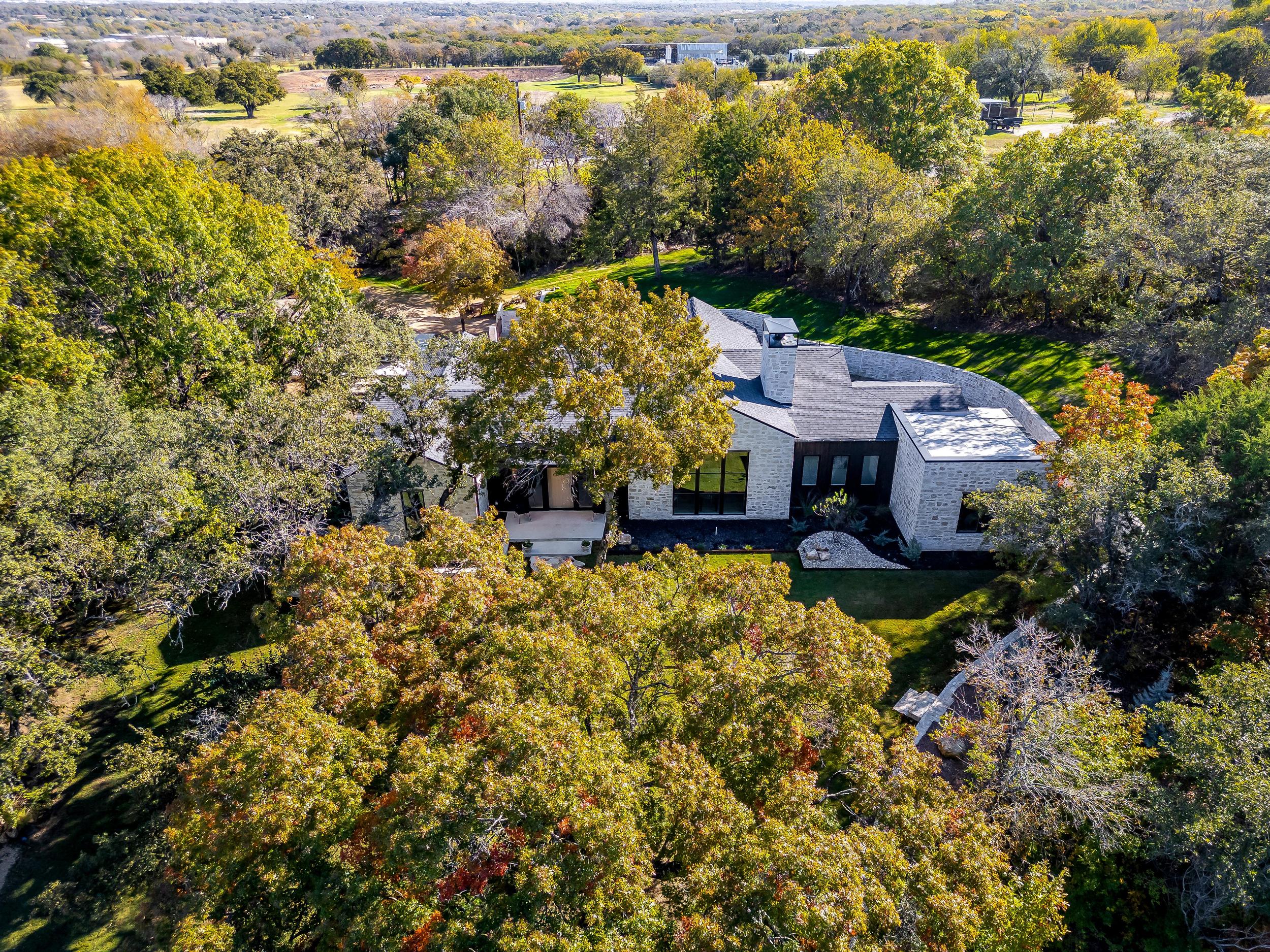
Site evaluation is first. Soil conditions, drainage patterns, topography, utility access, and any municipal or HOA requirements that affect what you can build and where you can place it. In areas like Aledo and western Parker County, where many of our clients build, lot characteristics vary significantly even within the same subdivision.
Then comes design. This is where we spend the most time — and where that time pays the biggest dividends. We work through how you live, how you entertain, how your needs might evolve, and how the home sits on the land. Every detail, from window placement to material selection, gets resolved before we move to the next phase.
Permitting and engineering follow. Structural engineering, MEP (mechanical, electrical, plumbing) design, energy compliance, and permit applications. These vary by jurisdiction, and navigating them efficiently is one of the advantages of working with a builder who knows the local landscape.
By the time we break ground, the home has already been built once — on paper. That’s what makes the construction phase go smoothly.
Why Spring Is Actually the Right Time to Start Talking
If you’re reading this in spring 2026 and imagining yourself in a new home by next year, the math is straightforward: the conversation needs to start now. Not construction — the conversation.
Starting the design process in the spring gives you the full summer and fall to work through design without rushing. It means your plans can be finalized and permitted through the winter months, positioning you for a spring or early summer groundbreaking the following year.
That’s not a slow timeline. That’s a smart one. And the homeowners who follow it consistently end up happier with the result than the ones who tried to compress the front end.
The First Step Is Smaller Than You Think
You don’t need a lot, a floor plan, or a budget number to start a conversation. You just need a sense of what you’re looking for — even if it’s vague. “I want something that doesn’t feel like every other house in the neighborhood” is plenty to start with.
We’ve put together a guide for homeowners who are in exactly this phase — thinking seriously but not quite sure where to begin. It walks through what to expect, what to ask, and how to evaluate whether a builder is the right fit. Download it here, or just reach out and start talking. The best builds always start with a conversation.