For the better part of a decade, the formula was simple: white cabinets, white countertops, stainless steel hardware, gray walls. It looked clean. It photographed well. And it was safe.
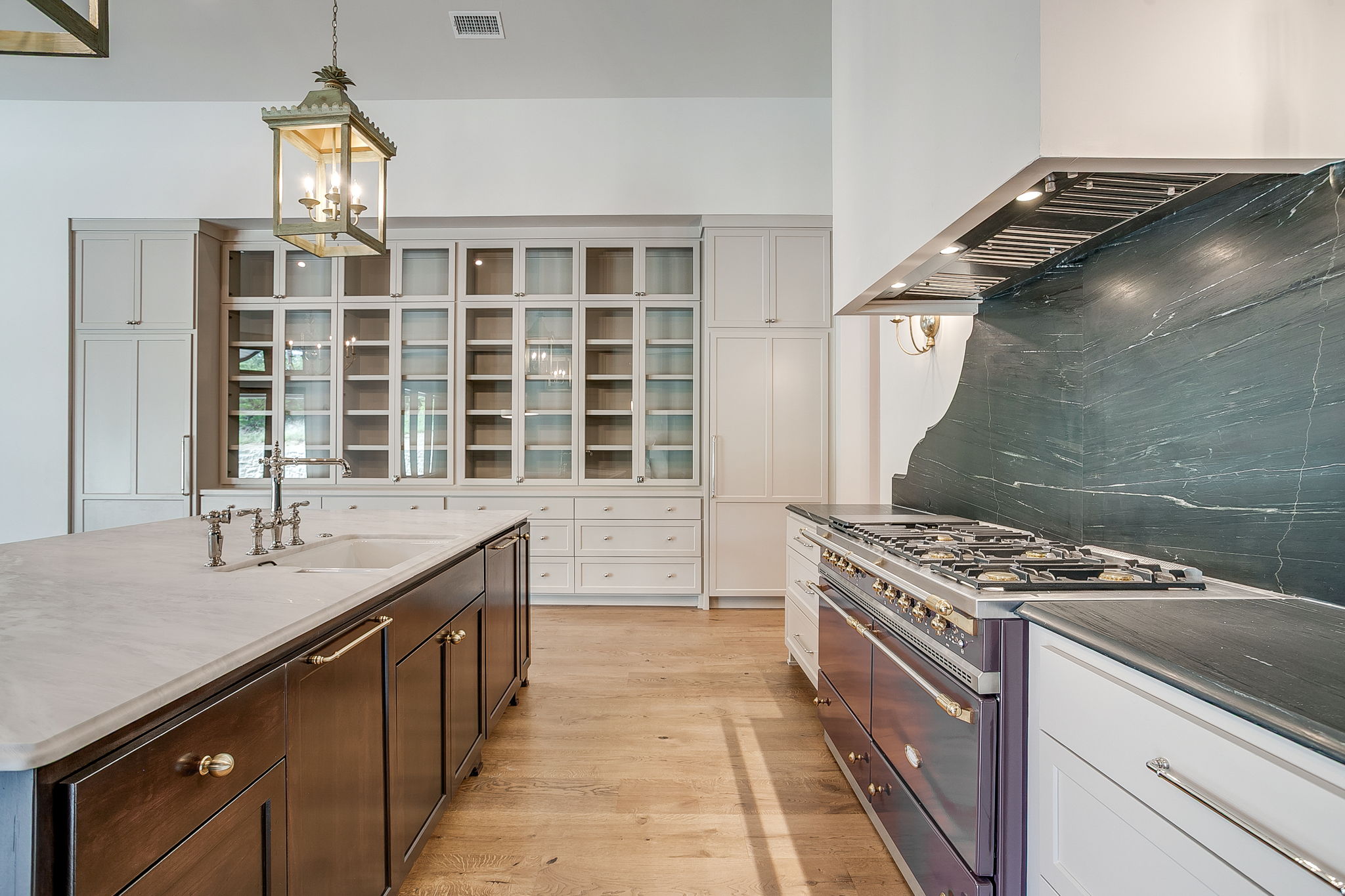
It was also, gradually, making every kitchen in America look exactly the same.
The data coming out of this year’s industry conferences tells a clear story: that era is over. And what’s replacing it is warmer, more textural, and more personal than anything we’ve seen in the luxury market in years.
What the Numbers Say
The cabinet finish data is striking. Light wood finishes — the kind with visible grain and warm, natural tones — are up 12% year over year and now represent the most popular category at 66%. Off-white and cream finishes are up 17%, holding strong at 65%. Medium wood tones have surged to 46%, up from 37% last year.
Meanwhile, solid white cabinets have dropped to 42%, down from 52% just a year ago. That’s a 27% decline. Grays have fallen even further, down 21%.
On countertops, the direction is equally clear. White subtle-vein neutral is up 131%. Dark low-contrast surfaces are up 83%. Both point toward quieter, more textural choices — surfaces that have depth and movement without screaming for attention.
What’s Actually Happening
This isn’t just a color shift. It’s a philosophy shift. The all-white kitchen was designed to look impressive in a single moment — the listing photo, the open house, the Instagram post. The kitchens being designed now are built to feel right over time.
Light woods bring warmth without heaviness. Natural stone with subtle veining adds visual interest that doesn’t date. Off-whites and creams feel clean without feeling sterile. And green — which is gaining serious momentum, up 13% and moving beyond accent use into primary cabinetry — adds a sense of groundedness that white never could.

The Styles Leading the Way
The three kitchen styles getting the most attention right now are soft modern, transitional, and modern traditional. What they share is a commitment to warmth, texture, and tonal harmony — kitchens where the materials work together instead of competing for attention.
Soft modern pairs clean lines with natural materials. Transitional bridges contemporary and classic without committing fully to either. Modern traditional borrows the proportions and details of classic design but executes them with a restrained, updated palette.
All three reject the idea that a kitchen needs to be all one thing. They layer. They mix. And they feel intentional rather than formulaic.
Edge Profiles and the Details That Signal Quality
Even the small details are shifting. Countertop edge profiles are moving toward simpler, more refined shapes that let the material speak for itself. The ornate, heavily routed edges of the early 2000s are gone. What’s replacing them is clean, honest, and designed to draw your eye to the stone, not the edge.
These details matter because they’re the difference between a kitchen that looks expensive and a kitchen that looks considered. Our clients don’t want the former. They want the latter.
What This Means for Your Build
If you’re planning a custom home and still picturing an all-white kitchen, you’re not wrong — you’re just working from a playbook that’s aging fast. The market is moving toward choices that feel personal, textural, and enduring. That doesn’t mean bold or risky. It means thoughtful.
At Dwell, our design team curates material palettes that we know will age well in the North Texas climate and in the context of how our clients actually use their kitchens. We’d love to show you what that looks like. Reach out, or start by exploring our recent projects.