The idea of indoor-outdoor living sounds simple: big sliding doors, a nice patio, maybe a grill. And in a temperate climate, that’s probably enough. In North Texas, it’s not even close.
The idea of indoor-outdoor living sounds simple: big sliding doors, a nice patio, maybe a grill. And in a temperate climate, that’s probably enough.
In North Texas, it’s not even close.
We live in a place where July afternoons hit 105 degrees, spring storms roll in with thirty minutes of warning, and a perfect October evening makes you forget every miserable day in August. Building indoor-outdoor living that actually works here — that you’ll use in every season, not just the comfortable ones — requires a completely different approach than what you’ll find in most design magazines.
Here’s how we think about it at Dwell.
Start With Shade, Not Views
The instinct is to design the back of the house around the biggest, most dramatic opening possible. Floor-to-ceiling glass, a wall that folds away completely, an unobstructed sightline from kitchen to horizon.
That’s a beautiful idea — until June. Without intentional shade planning, that wall of glass turns into a solar oven, your energy costs spike, and the outdoor space it opens onto becomes unusable for four months of the year.
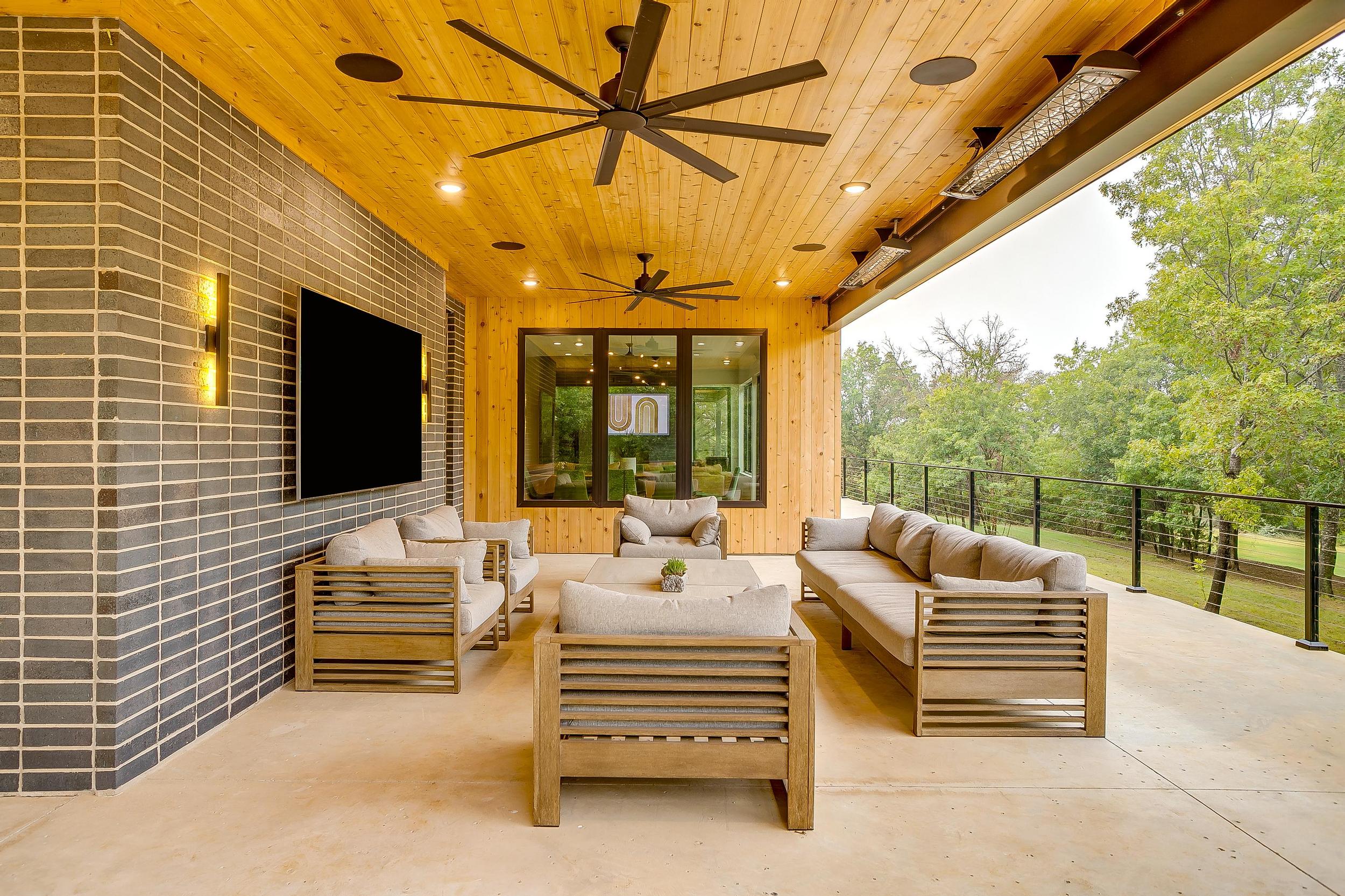
We start every outdoor living design with shade. Deep roof overhangs, covered outdoor rooms with ceiling fans, and strategic tree placement that creates natural cooling without blocking views. The goal is a space that’s comfortable at 2pm in July, not just 7pm in April. If it works in the hardest conditions, it works everywhere.
Materials That Earn Their Place
Not every material that looks great in a showroom belongs on a North Texas patio. Natural wood decking is gorgeous until the first full summer of direct sun, expansion cycles, and driving rain. Certain natural stones absorb heat and become too hot to walk on barefoot by mid-afternoon.
We select exterior materials for performance first and aesthetics second — though the two aren’t mutually exclusive. Porcelain pavers that stay cool underfoot and resist staining. Powder-coated steel framing that weathers without corroding. Composite decking that holds its color and texture through years of UV exposure.
The best outdoor spaces don’t just look well-designed. They look well-designed five years in, with minimal maintenance and no regret.
The Outdoor Kitchen That Gets Used
Every custom home client asks about an outdoor kitchen. Very few end up using the one they build — and it’s almost always because it was designed as an afterthought.
An outdoor kitchen that actually gets used needs more than a built-in grill and a countertop. It needs task lighting for evening cooking. It needs counter space that’s close enough to the seating area that the cook isn’t isolated. It needs storage that’s sealed against weather and pests. And it needs to be positioned so that smoke, heat, and noise don’t push back into the indoor living spaces.
We design outdoor kitchens with the same rigor we bring to interior kitchens — because if it’s worth building, it’s worth building to be used daily, not just on the weekends you remember to fire up the grill.
The Transition Is Everything
The most important part of indoor-outdoor living isn’t the outdoor space or the indoor space. It’s the threshold between them.
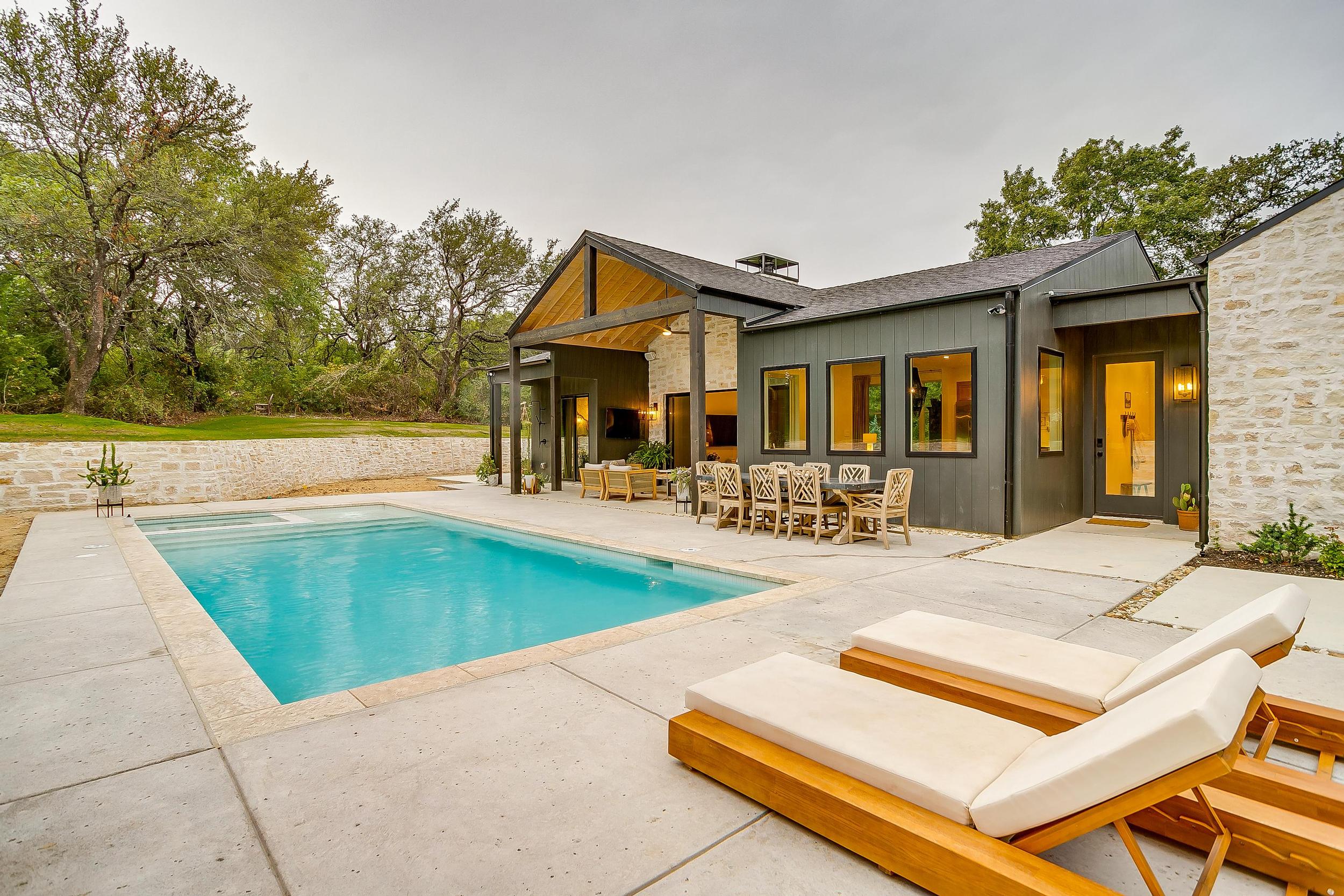
When that transition is designed well, moving from inside to outside feels effortless. The flooring material shifts but the sight line continues. The ceiling height drops but the sense of openness doesn’t. The climate changes but the comfort doesn’t.
We pay close attention to these transitions because they’re where the design either succeeds or falls apart. A clumsy threshold — a step down that feels abrupt, a door track that catches your eye, a sudden shift from cool air to wall of heat — breaks the illusion. And the illusion is the whole point: the feeling that your home extends beyond its walls.
Designed for How You Actually Live Here
Indoor-outdoor living in North Texas isn’t about recreating a California lifestyle. It’s about designing for the climate, the light, and the rhythm of life that’s specific to this place. It’s about making outdoor space that’s honest about 100-degree days and designed to be enjoyed anyway.
If you’re imagining a home where the line between inside and outside disappears — and stays comfortable year-round — that’s exactly the kind of challenge we love. Take a look at how we’ve approached it in our recent projects, or reach out and tell us what you’re envisioning.