There’s a reason some homes make you exhale the moment you walk in. Not because of the square footage or the price tag, but because something about the space itself — the light, the materials, the way the room breathes — tells your nervous system it’s safe to relax.
That’s not poetry. It’s neuroscience.
There’s a growing field called neuroaesthetics that studies how the brain perceives and responds to beauty, space, and environment. Researchers have identified specific design elements — light, color, texture, pattern, sound, and spatial proportion — that directly influence how we feel in a room. Not how we think about it. How we feel in it, at a neurological level.
At Dwell, we’ve always designed with the belief that a home should feel right, not just look right. What the science is now confirming is that the choices we make — the materials, the lighting, the spatial flow — aren’t just aesthetic preferences. They’re inputs that shape your daily experience of being home.
Here’s what that looks like in practice.
Natural Materials Aren’t Just a Style Choice
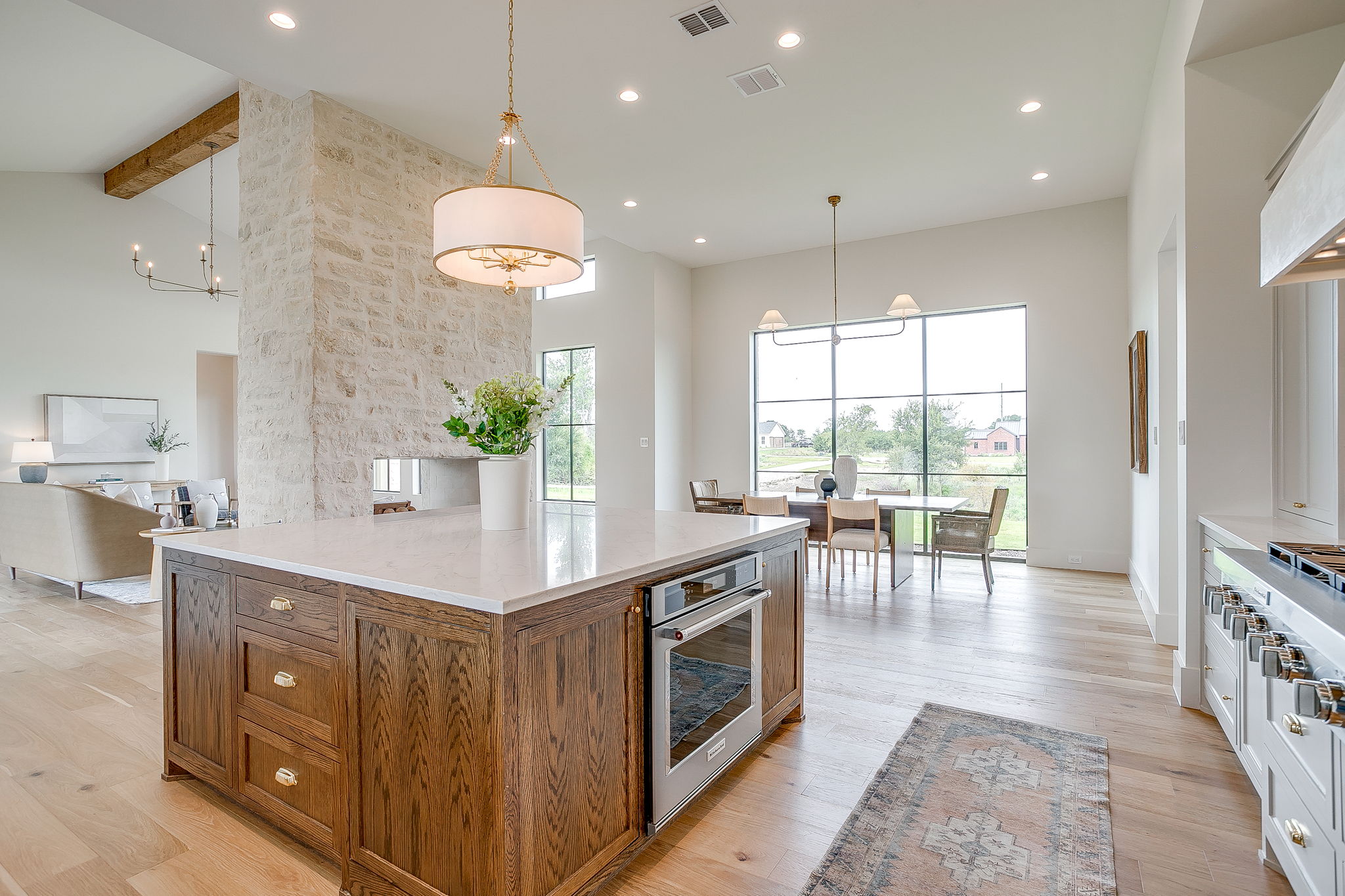
Wood, stone, and natural fibers aren’t trending because of Instagram. They’re enduring because of biology. Research shows that the presence of woodgrain — the kind of organic pattern found in nature — can reduce physiological stress markers by up to 60%. Your brain recognizes natural patterns as safe. It reads them as “this is a place where I can rest.”
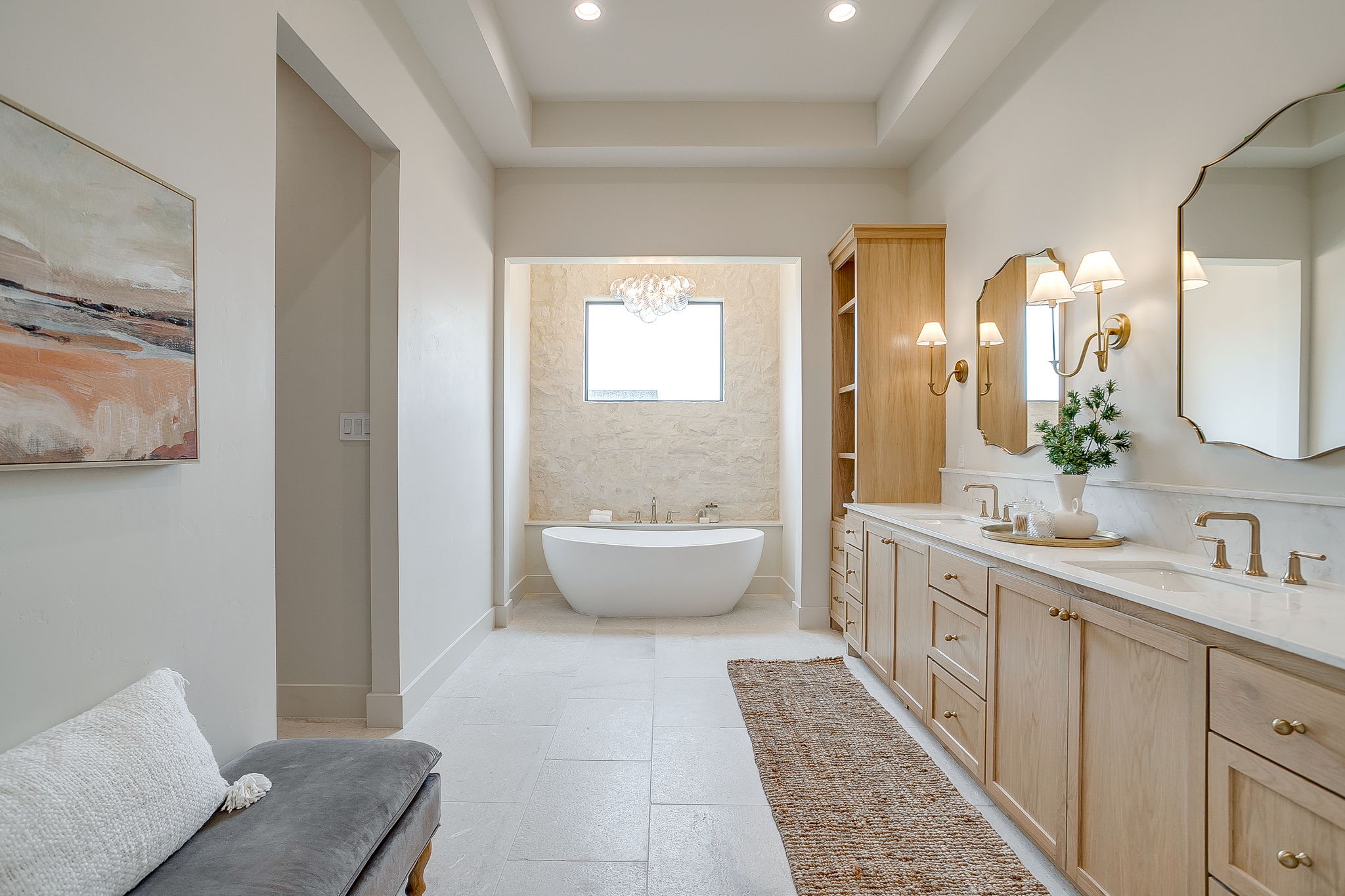
That’s why we gravitate toward natural stone with visible movement, wide-plank white oak in warmer tones, and plaster finishes that give walls a quiet texture you notice when the afternoon light hits. These aren’t decoration. They’re signals to your nervous system.
Light Does More Than Illuminate
The way light enters a home — where, when, and how much — affects everything from your sleep quality to your mood at dinner. Circadian rhythm isn’t just about when you go to bed. It’s influenced all day long by the light in your environment.
Harsh overhead lighting creates tension. Warm, layered light creates calm. Matte finishes on walls absorb light softly, while high-gloss surfaces bounce energy around a room. LED lighting, if poorly specified, can suppress melatonin production and disrupt your sleep cycle without you ever realizing the source.
We design lighting in layers — recessed, indirect, task, and accent — so that every room can shift in mood depending on the time of day. A home that’s lit well doesn’t just look better. It feels fundamentally different to walk through at 7am versus 9pm, and that’s by design.
Sound Is Invisible but Powerful
Most people don’t think about acoustics when they’re designing a home. But sound is one of the most powerful environmental inputs your brain processes. An echoey, hard-surfaced room creates low-level stress whether you’re conscious of it or not. A room with soft-close cabinetry, sound-absorbing materials, and intentional acoustic separation between living spaces creates a fundamentally different experience.
This is one of the reasons the wide-open floor plan is being reconsidered. When every sound carries from the kitchen to the living room to the study, there’s no refuge. Intentional separation — rooms with purposeful boundaries that create pockets of quiet — isn’t about closing off space. It’s about giving your brain somewhere to rest.
Pattern, Texture, and the Need for Negative Space
Your brain processes visual information constantly, even when you’re not paying attention. Rooms with too much visual stimulation — competing patterns, high-contrast surfaces, cluttered sight lines — create cognitive load. Rooms with intentional negative space, tonal consistency, and textural depth let your eyes move through the space without effort.
This is why we stay tonal in our material palettes — stone, carpet, and pattern that add depth without competing for attention. The goal is a space that feels designed and detailed but doesn’t demand anything from you. You should be able to walk into your living room after a long day and feel your shoulders drop without knowing why.
Designing for How You Feel
None of this means your home should look like a laboratory or a meditation retreat. It means that the choices behind the beauty — the materials, the light, the spatial planning, the acoustics — should be as intentional as the finishes you see.
At Dwell, we’ve always believed that a well-designed home does something you can’t quite articulate. It makes you feel better. The science is now catching up to what our clients have been telling us for years: the homes that feel right aren’t accidents. They’re engineered — quietly, carefully — to support how you live.
If you’re thinking about building and want to understand how design decisions shape the way a home feels, we’d love to show you. Start with our project gallery, or reach out for a conversation.