We don’t build “wellness homes.” We don’t have a wellness package or a wellness wing. But every Dwell home is designed to make your daily life feel better — through choices you’ll probably never notice.
The word “wellness” has been co-opted. It conjures spa bathrooms, meditation rooms with custom lighting, and wellness wings that most people will never use. It sounds expensive, aspirational, and slightly performative.
But the actual idea behind wellness in home design — that the space you live in should support how you feel every day — is one of the most practical things a builder can focus on. The trick is doing it without making it feel like a brochure.
Here’s how we think about it at Dwell. None of these choices have the word “wellness” attached to them. All of them change how you experience your home.
The Drop Zone
You walk in from the garage, arms full of bags, kids trailing behind, dog underfoot. The first 30 seconds of arriving home set the tone for your evening. If there’s nowhere to put things down — nowhere for backpacks, mail, keys, shoes — your home greets you with friction.
A family foyer or drop zone is a small, intentional space just inside the entry that gives you a place to set down the day. It’s not a mudroom with a cute sign above it. It’s a design decision that eliminates the low-level stress of clutter accumulating in the spaces where you’re trying to relax.
The Kitchen That Hides the Mess
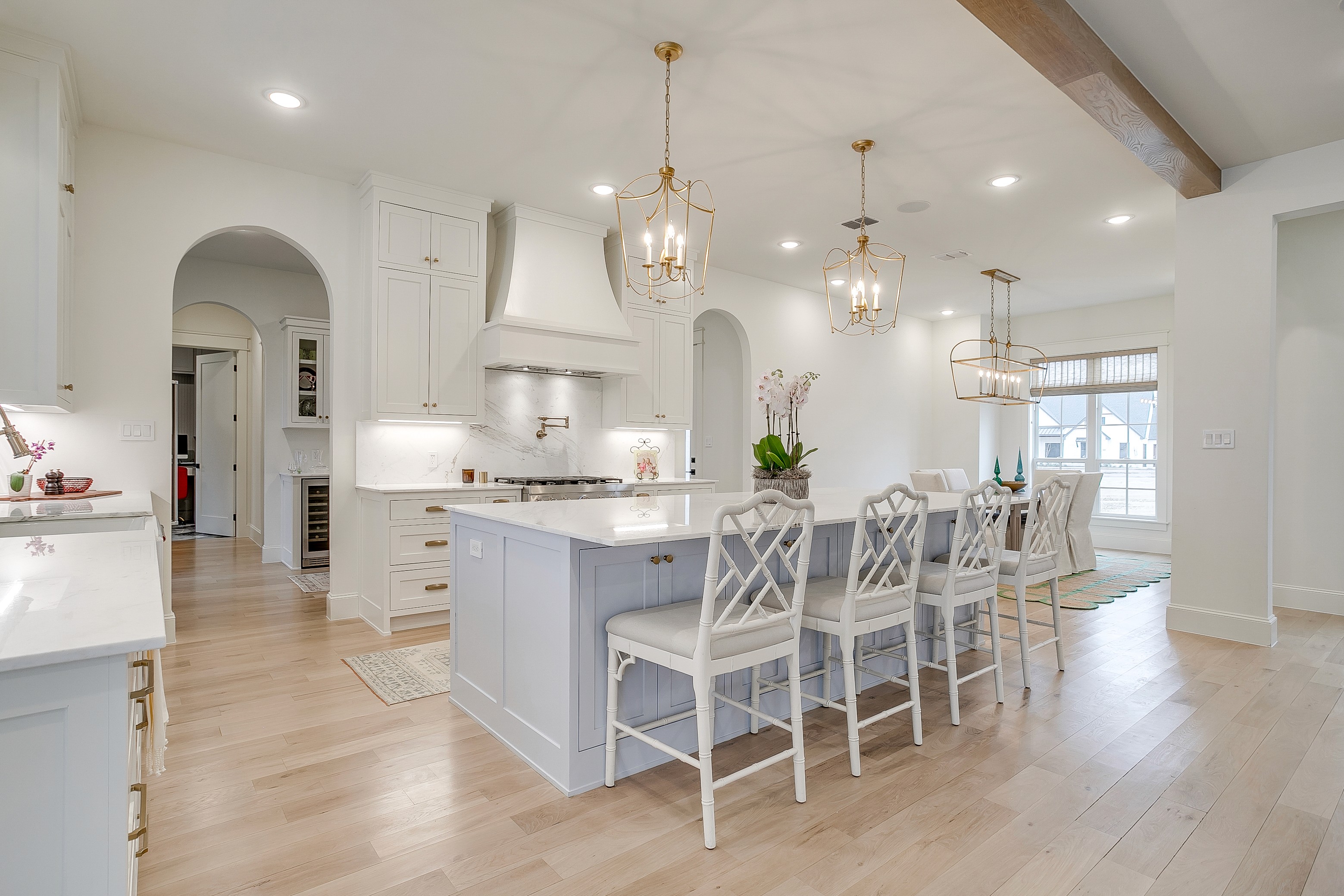
Your kitchen is the most-used room in the house. It’s where you cook, host, work, supervise homework, and have every important conversation your family will ever have. It needs to handle all of that and still feel composed.
A scullery or working pantry — a secondary prep and storage space connected to the main kitchen — lets you keep the mess out of sight. Dishes pile up in there, not on your island. Grocery bags get unpacked in there, not on your countertop. The kitchen you see and live in stays clean and calm, even when real life is happening ten feet away.
Light That Follows Your Day
Morning light should feel different from evening light. The kitchen at 7am needs energy. The living room at 9pm needs warmth. Most homes have one lighting mode: on. That’s not how your body works.
We design lighting that follows circadian rhythm — brighter, cooler tones where you start your morning and warmer, softer tones where you wind down. It’s not smart home technology (though it can be). It’s window placement, fixture selection, and finish choices that let natural and artificial light work together instead of against each other.
Rooms That Have a Job
The open-concept era taught us that bigger is better and walls are the enemy. But there’s a cost to living in a space with no boundaries: noise carries, visual clutter accumulates, and there’s nowhere to be alone without leaving the house.
We’re designing more homes with rooms that have a single purpose. A reading nook that’s actually sized for one person and a book. A morning coffee spot that catches the east light. A study with a door that closes. These aren’t luxury additions. They’re the rooms that make a home feel like it was designed for people, not photographs.
Materials That Age Quietly
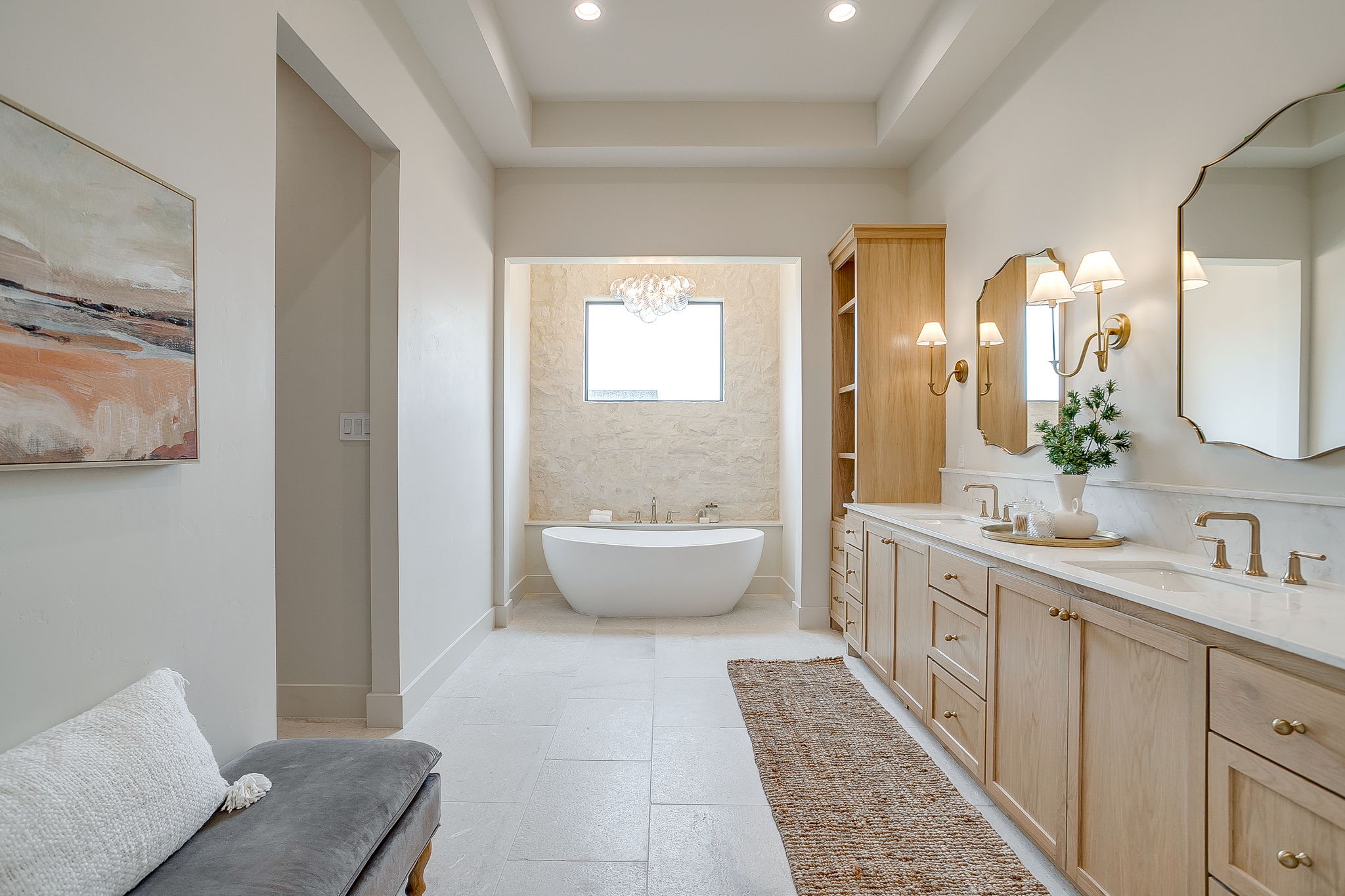
Trend-driven finishes create a subtle but real anxiety: the awareness that your home is slowly going out of style. When you choose materials that age well — natural stone that develops a patina, wood that deepens in tone, hardware that wears gracefully — you remove that background noise. Your home stops being something you worry about maintaining an image for and becomes something you simply live in.
The Point
Wellness in home design isn’t a feature list. It’s the sum of dozens of small, intentional choices that eliminate friction, support your daily rhythms, and let you feel at ease in your own space. You may never notice most of them consciously. That’s the whole point — they work in the background, quietly making your life better.
If that sounds like the kind of home you want to live in, we’d love to talk about what that looks like for your family.